01/21/2026
Happy Wednesday, and welcome back to Tabletop Thoughts!
Today we are going to do a TTRPG review.
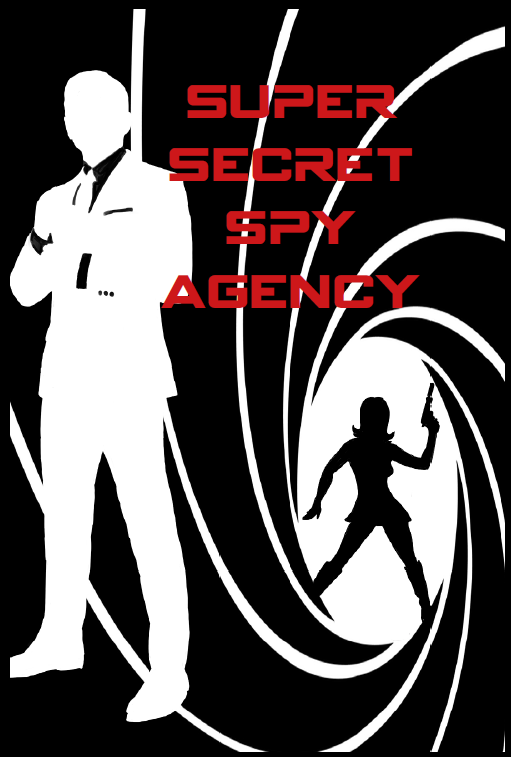
Super Secret Spy Agency: A Cinematic Spy RPG Review
Fast. Stylish. Dangerous. Exactly the way a spy game should feel.
What Is Super Secret Spy Agency?
Super Secret Spy Agency (SSSA) is a cinematic tabletop roleplaying game that puts players in the roles of elite agents working for a shadowy international organization. It’s a Kickstarter-backed RPG that flew a bit under the radar, but it’s one that deserves far more attention—especially from tables looking for a modern spy game that actually feels like a movie in motion.
I originally backed SSSA during its Kickstarter run, and after spending time reading through the rules, it quickly became one of those games that makes you wonder why it isn’t talked about more. Instead of trying to simulate every tiny detail of espionage, SSSA focuses on pacing, style, and genre-first design, which makes it really appealing if you want fast, cinematic spy action.
A Quick Note Before We Dive In
Before getting too far into this, I want to be clear about one thing: I haven’t actually played Super Secret Spy Agency at the table yet. This review is based entirely on reading the book, digging into the mechanics, and thinking about how it would run in actual play.
So everything below is just my opinion on how the game looks on paper. That said, there’s a lot here that I genuinely like, and it’s absolutely a game I want to get to the table sooner rather than later.
Core Mechanics: Simple, Fast, and Familiar
At its heart, SSSA uses a straightforward d20 resolution system. When an agent attempts something risky, they roll:
d20 + Attribute Modifier + Ability Rank
The Director assigns a Target Number (TN) based on difficulty, ranging from Very Easy (5) to Near Impossible (30). Meet or beat the TN, and the action succeeds.
What really stands out is how quickly this resolves. There’s no pausing the game to hunt down modifiers or reference charts. You roll, add a couple of numbers, describe what happens, and keep the scene moving. The system is clearly built to protect momentum.

Attributes & Secondary Stats: Clean and Purpose-Driven
Agents are defined by four core attributes:
Strength – Physical power, endurance, and raw toughness. Used for brawls, feats of force, and surviving punishment.
Smarts – Intelligence and problem-solving. Governs investigation, hacking, planning, and technical challenges.
Suave – Charm and social control. Covers persuasion, deception, intimidation, and smooth-talking your way past obstacles.
Agility – Speed and coordination. The backbone of movement, gunplay, parkour, and evasive action.
Alongside these are four secondary attributes, and none of them feel like filler:
Defense – How hard you are to hit. Defense sets the number enemies must meet or beat to land an attack.
Perception – Awareness and attention to detail. Used for spotting ambushes, clues, and looming threats.
Resistance – Physical resilience against poisons, disease, and environmental hazards.
Effort – A limited pool of points that can be spent to boost rolls or damage after the dice are rolled.
Every stat here feels like it exists for a reason, and it’s easy to see how all of them would come up naturally during play.

Trade Craft (Abilities): Where Characters Come Alive
Trade Craft abilities are where Super Secret Spy Agency really starts to shine. These aren’t just passive bonuses—they define what your agent is actually good at.
Parkour lets you sprint across rooftops under fire. Gun Fu turns combat into stylish chaos. Social abilities let you control conversations just as effectively as firefights. Ability rank both improves your odds and unlocks specific actions, which makes character growth feel meaningful.
I also really like that agents can attempt abilities they don’t have, just at a penalty. That one rule alone encourages creativity and keeps players focused on the scene instead of the character sheet.
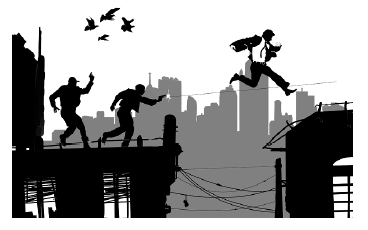
Example of Play: Rooftop Chase Under Fire
An agent is sprinting across city rooftops as armed goons chase from behind.
Leaping the Gap
The agent attempts a risky jump to the next building. The Director sets the Target Number at 20 (Hard).
d20 roll: 12
Agility modifier: +4
Parkour ability rank: +2
Total: 18 (failure)
The player spends 2 Effort, pushing the total to 20. The agent barely clears the gap, slams into the rooftop, and rolls to their feet as bullets chew into the edge behind them.
Enemy Attacks (Defense in Action)
One of the goons fires as the agent runs. The agent’s Defense is 16, so the goon needs to meet or beat that number.
Goon’s d20 roll: 11
Goon’s attack bonus: +3
Total: 14 (miss)
The shot goes wide, shattering a rooftop vent as the agent keeps moving.
Return Fire
On their next action, the agent spins mid-run and fires back. The Director sets the Target Number at 15 (Standard).
d20 roll: 9
Agility modifier: +4
Shoot ability rank: +3
Total: 16 (hit)
The shot lands cleanly. Damage is rolled, the goon drops, and the agent disappears into the night.
This is exactly the kind of scene SSSA feels built for—fast, readable, and driven by momentum instead of math.
Combat & Survival: Dangerous, but Fair
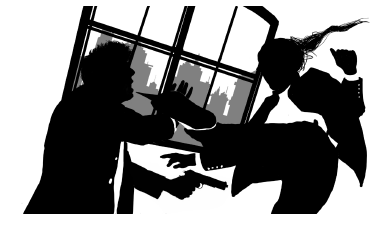
Combat in SSSA is fast and dangerous. Agents only have a small number of wounds and stuns, which keeps fights tense without dragging them out.
At the same time, the “Back from the Dead” mechanic gives agents one last chance when things go very wrong. It’s a great middle ground where combat matters, but a single bad roll doesn’t automatically end a character’s story.
Gear, Gadgets, and the Quartermaster
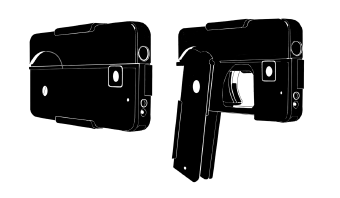
A spy game lives and dies on its gadgets, and SSSA delivers here. Gear ranges from standard-issue equipment to experimental R&D toys, many of which are single-use or highly situational.
That design keeps gadgets exciting without letting them take over the game. Directors are also encouraged to invent new gear, which fits perfectly with the game’s flexible, improvisational tone.

Director Guidance & Tone
One of the strongest parts of the book is how clearly it talks to the Director. The rules consistently encourage flexibility, improvisation, and cinematic pacing instead of strict punishment.
It’s very clear that SSSA wants everyone at the table focused on telling a great spy story, not catching each other in rules mistakes.
Pros & Cons
Pros
Fast, cinematic gameplay that keeps momentum high
Strong genre focus with no identity drift
Low rules friction and easy onboarding
Effort system creates great tension and clutch moments
Encourages improvisation and creative problem-solving
Cons
Not a crunchy, tactical combat game
Character progression is slower and more restrained
Relies heavily on Director judgment and tone-setting
One-Shot or Campaign?
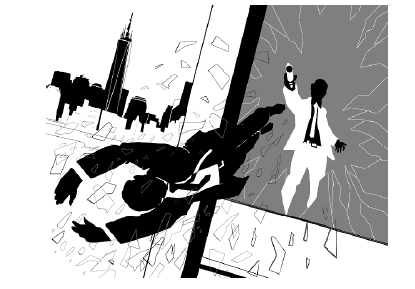
Super Secret Spy Agency is excellent for one-shots. Character creation is quick, the rules are easy to explain, and the game handles self-contained missions extremely well. It’s a great choice for conventions, pickup games, or a cinematic “movie night” RPG.
It also supports campaign play, but in a very specific way. Advancement exists through commendations, medals, and promotion rolls, but progression is intentionally measured and never guaranteed. Characters grow more competent and respected, not wildly more powerful.
This makes SSSA ideal for episodic, TV-series-style campaigns rather than long power-fantasy arcs.
Final Thoughts
Super Secret Spy Agency feels like a game that knows exactly what it wants to be. It prioritizes style, pacing, and cinematic action over mechanical excess, and it does so confidently.
If your table is looking for a lesser-known modern spy RPG that rewards bold ideas and fast play, SSSA is absolutely worth checking out—and deserves a place at far more tables than it currently has.
Keep on gaming!
2026 Goals Progress
- Minis Painted: 99 / 150
- Large Models / Terrain: 2 / 6
- YouTube Videos: 2 / 24
- Game Reviews: 1 / 4
- Games Played (TTRPG + Board Games): 0 / 4
- Thursday Drop-Ins Created: 0 / 12
- New TTRPG Systems Tried: 0 / 3
- Shadowdark Mini-Campaign Sessions: 0 / 3
- Shadowdark Release on DriveThruRPG: 0 / 1
 tabletop-thoughts.com
Back in the late 70’s and early 80’s, when I was a teenaged boy, me and my friends fell in love with AD&D. We then found TSR’s “Top Secret” role-playing game. As I remember it, the hand-to-hand combat was fantastic, but don’t get it a gun fight! Unlike D&D, it’s very hard to survive a near death from gunshots than it was from maces and swords! LOL.
This looks like a fun and interesting game, that cries out for a thoughtful Gamemaster. I wonder how it might work as a solo exercise?
LikeLiked by 1 person
I also had Top Secret!
If I was going to run this solo, I would use something like Mythic to play the role of the Director.
LikeLiked by 1 person