09/12/2025

The Shadowdark Philosophy of Danger
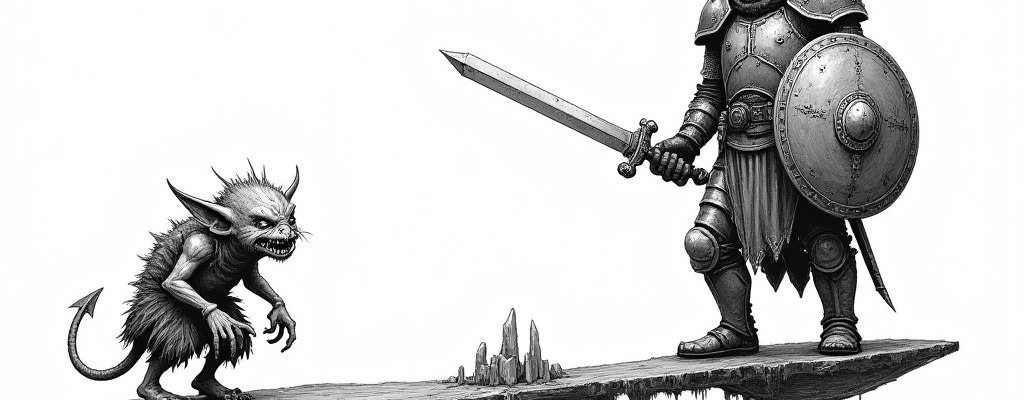
Unlike many tabletop RPGs that cushion the consequences of failure, Shadowdark embraces the full weight of danger. From the very first session, characters are at risk, and death is a real possibility—even for low-level adventurers. This design choice is not about punishing players; it’s about creating tension, excitement, and investment in every decision. Each corridor explored, each trap triggered, and each combat encounter carries meaningful consequences, forcing players to think strategically and act carefully. The stakes are high, and the thrill of survival is palpable.
However, “deadly” does not mean arbitrary or unfair. Shadowdark emphasizes that players’ choices—and the randomness of dice—determine outcomes consistently and understandably. Success or failure is tied to actions, preparation, and resource management, not secret rules or hidden mechanics. By keeping the rules transparent and predictable, the system rewards clever thinking, teamwork, and risk assessment. Players learn to respect the world, anticipate dangers, and adapt creatively, making every triumph hard-earned and every loss a lesson in strategy and consequence.

Why Encounter Balance Looks Different Here
In Shadowdark, traditional tools like XP budgets or challenge ratings are intentionally absent. Instead of relying on predefined numbers to dictate difficulty, encounters are shaped by instinct, judgment, and player decision-making. The same group of monsters—such as a band of skeletons—can completely overwhelm one adventuring party while another navigates the same foes with relative ease. Success depends on strategy, resource management, and creative thinking rather than on predictable formulas.
This design creates tension through uncertainty rather than through rigid mechanics. Players cannot simply calculate the odds of success; they must assess each situation carefully and respond to dangers as they arise. Because outcomes are not guaranteed, every encounter feels alive and unpredictable, encouraging adaptive play and fostering memorable, high-stakes moments. The result is a game where victories feel earned, losses teach lessons, and the thrill comes from facing the unknown head-on.
Tools for Fair but Lethal Play
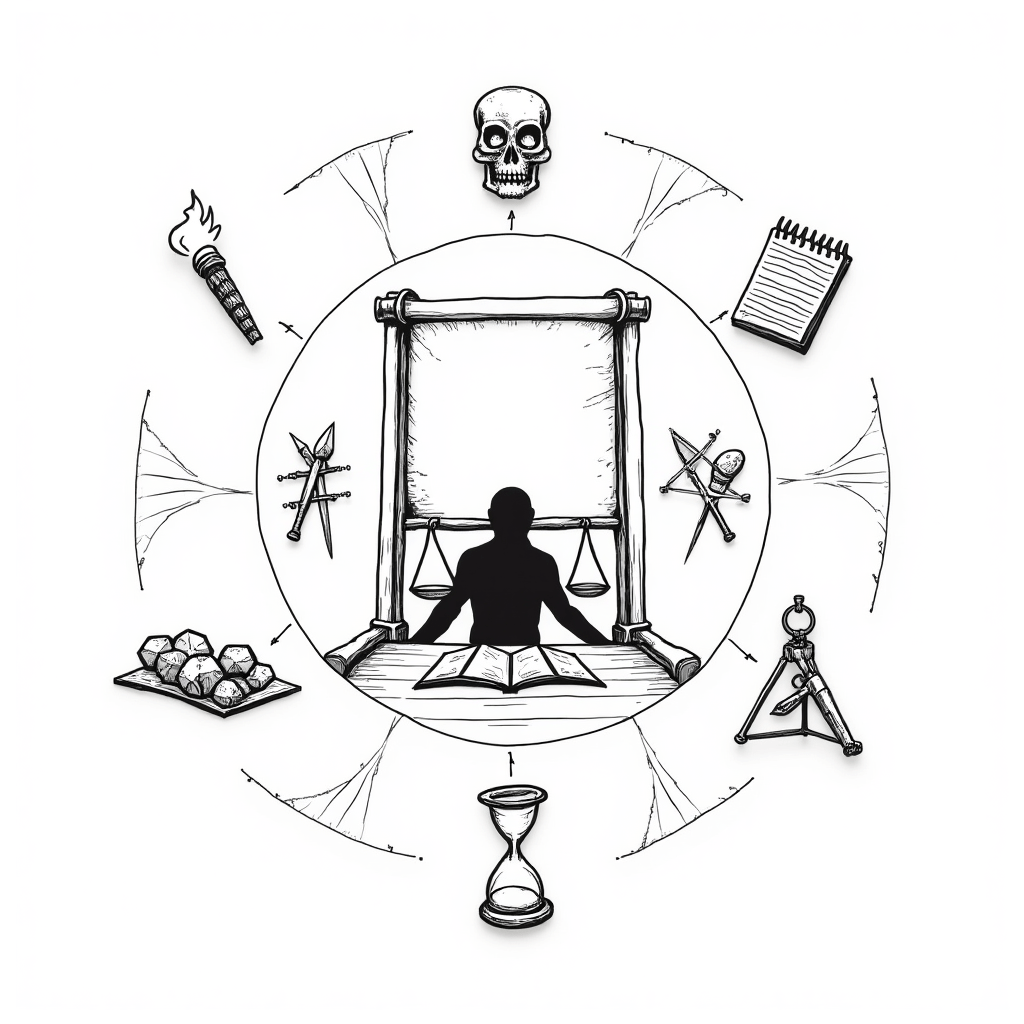
In Shadowdark, maintaining fairness while preserving danger is essential. One way to achieve this is by telegraphing danger: give players subtle clues that an enemy or situation may be deadly. This could include massive tracks in the mud, gnawed bones scattered in a corridor, or whispered legends of a creature’s fearsome power. By providing hints, players can make informed decisions without removing the element of risk.
Another key approach is to offer escape routes. Adventurers should always have the option to retreat if they realize they are outmatched, keeping encounters tense but not arbitrarily punishing. Shadowdark also encourages rewarding smart play—creative solutions, clever traps, or clever avoidance can be just as effective as brute-force combat. By combining these techniques, the game fosters high-stakes encounters that feel fair, exciting, and full of meaningful choices.
Keep Monsters Unnamed to Heighten Suspense
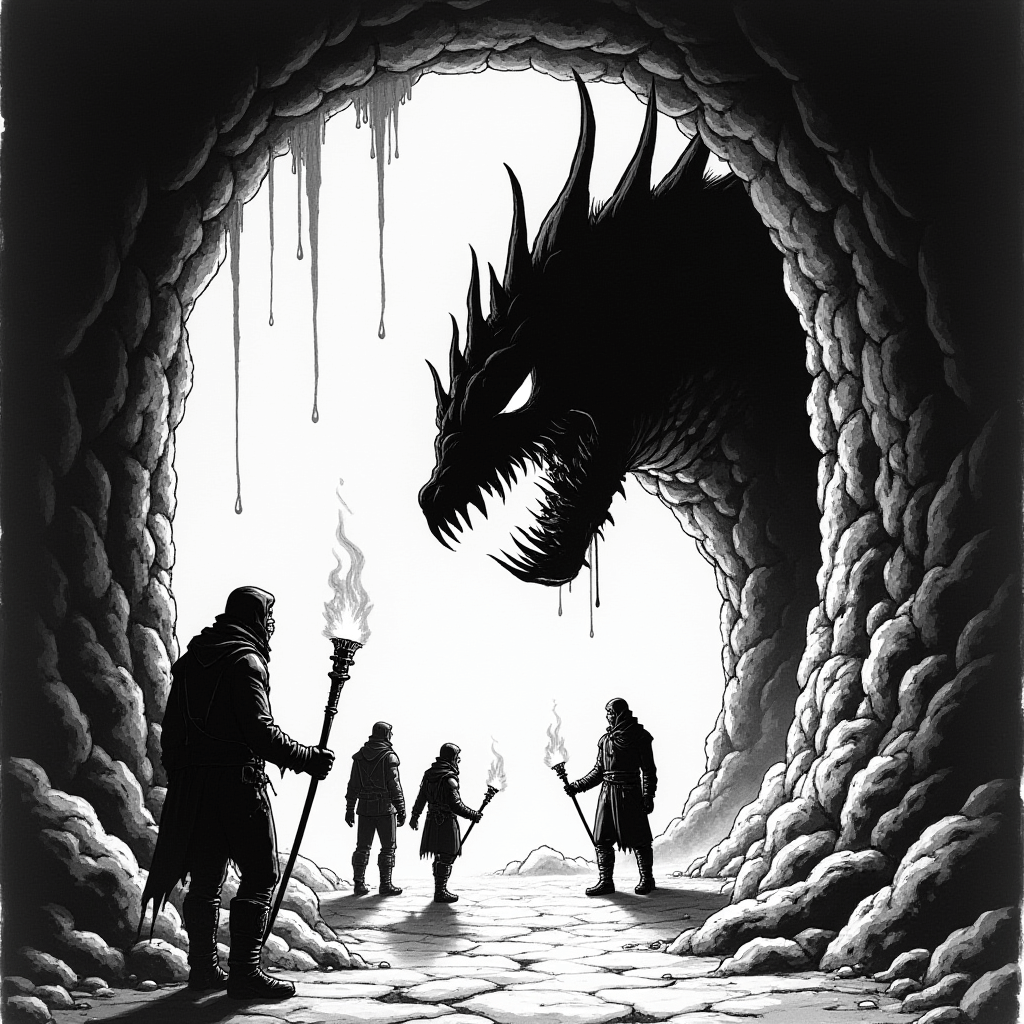
A core tactic for maintaining tension in Shadowdark is to avoid revealing a creature’s identity too soon. When players are told they are facing a specific monster, such as a troll, they immediately rely on their knowledge of the creature’s weaknesses: “Fire or acid, that’s how you kill it.” By withholding names and labels, the game forces players to respond to their characters’ perceptions rather than their own metagame knowledge.
Describe what adventurers sense instead: a towering silhouette hunched in torchlight, drool dripping from jagged teeth; heavy, wet footsteps squelching through the mud before the shape is fully revealed; or a stench that hits long before the creature itself comes into view.
This approach puts the weight of decision-making squarely in the players’ hands, with real consequences for success or failure. Some adventurers may charge in recklessly, others may probe cautiously, and a few might retreat entirely. Each choice carries risk, forcing careful consideration and encouraging creative problem-solving. By emphasizing perception and suspense over rote knowledge, Shadowdark keeps encounters unpredictable, thrilling, and deadly—without ever feeling unfair.

Let the Dice Speak
At the core of Shadowdark’s philosophy is the idea that the dice determine outcomes, not hidden mechanics or arbitrary intervention. The game isn’t about shielding characters from danger; it’s about testing them in meaningful ways. Total party kills (TPKs) are possible, and when they occur, players should be able to trace the consequences back to their own decisions—misjudged risks, poor tactics, or bold gambles. This transparency ensures that even the harshest outcomes feel earned rather than unfair.
In Shadowdark, balance is measured not by numbers or formulas, but by trust between the game master and the players. When players understand that the GM is both impartial and consistent, each encounter gains weight. Victories feel satisfying, earned through clever thinking and careful play, while defeats become memorable stories, celebrated for the drama and tension they bring. By letting the dice speak, Shadowdark creates a game where fairness and lethality coexist, producing adventures that are thrilling, suspenseful, and unforgettable.
Keep on gaming!
 tabletop-thoughts.com