02/13/2026
Happy Friday, and welcome back to Tabletop Thoughts!
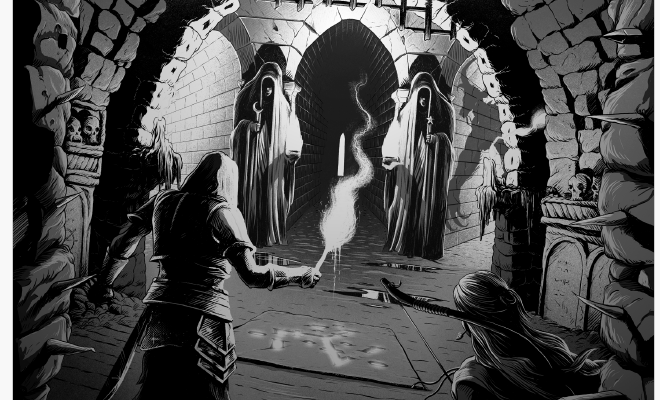
Today, we’re diving back into DELVE, the massive third-party supplement for Shadowdark RPG. This time we’re shifting the spotlight onto the player ancestries included in the book—five new options that lean hard into strange, monstrous dungeon-fantasy territory.
Shadowdark ancestries are usually quick, clean, and minimal, so it’ll be interesting to see how DELVE handles them… and whether they actually feel like they belong in Shadowdark’s gritty, lethal style of play.
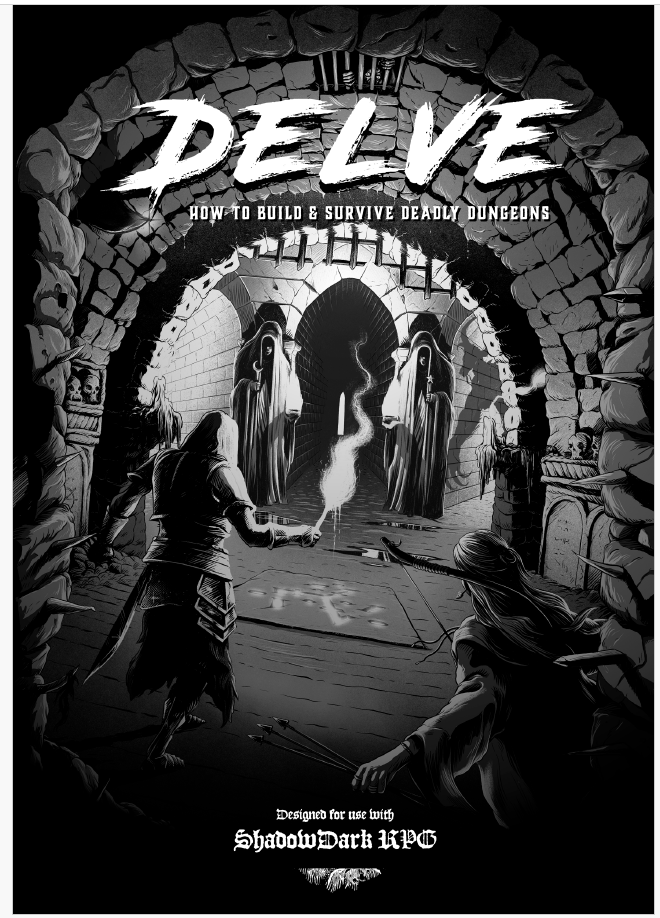
DELVE adds five new player ancestries to Shadowdark. On paper, that sounds like a great fit—Shadowdark is lean, fast, and deadly, and a few extra ancestry options should be an easy win.
Unfortunately, this section is where DELVE starts to feel like it’s wearing a 5E costume.
Shadowdark ancestries work because they are simple: one or two strong traits, a bit of flavor, and you’re ready to die in a hallway like Gygax intended. DELVE’s ancestries feel heavier, more “character build” focused, and in a few cases, mechanically uneven. Some are strong enough to reshape encounters, while others are so situational that they’ll rarely matter unless the GM bends the campaign around them.
And, as always, it raises the eternal question:
Why do players always want to play the monsters?
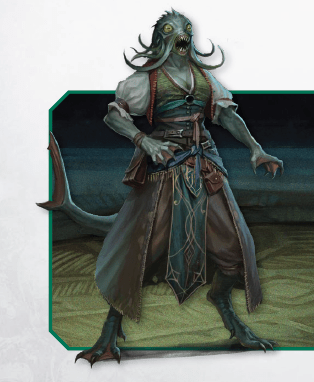
Deep Spawn
Deep spawn are shapeshifting fish-creatures who look human until submerged in water. Most serve evil entities of the deep, though some escape to live as adventurers.
You know Common and Merran.
Starting Feature: Aquatic Shapeshifter
While in water, you transform into an aquatic humanoid:
- swim at full speed
- breathe underwater
- claws deal 1d4 damage
Review
This ancestry is a great example of DELVE’s biggest weakness: cool idea, narrow usefulness.
In a nautical campaign, this is fantastic. In a normal Shadowdark dungeon crawl, it’s mostly dead weight. You might get one dramatic moment in an underground lake and then go back to being a human with a weird backstory.
Shadowdark ancestries are supposed to matter often. Deep Spawn only matters when the campaign happens to cooperate.
Verdict
Flavorful, but too situational to justify taking unless the GM is running an aquatic-heavy game.
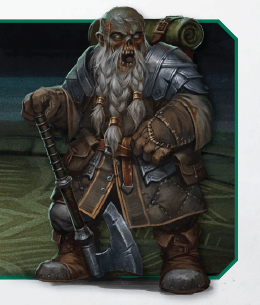
Graveborn
Graveborn are dead adventurers raised again through dark magic or divine intervention. You choose whether you are a Ghost, Skeleton, or Zombie.
You know Common and one additional common language.
Graveborn Type
Ghost
- once per day become incorporeal for 3 rounds
- damage is halved except from silver or magic
Skeleton
- once per day regain 1d4 + level HP
Zombie
- once per day, if reduced to 0 HP by non-magical damage, go to 1 HP instead
Review
This is where DELVE starts feeling like it wandered in from a 5E book.
The Ghost option in particular is extremely strong for Shadowdark. Becoming incorporeal for three rounds and halving most damage is the kind of feature that turns deadly dungeon situations into “wait, I can just ignore this.”
The Zombie ability is also a free get-out-of-death card once per day. In Shadowdark—where death is part of the contract—that’s a huge tone shift.
The Skeleton option is more reasonable, but still strong.
Mechanically, Graveborn feels like the ancestry section is trying to compete with 5E’s “cool character abilities” design philosophy instead of Shadowdark’s “you are fragile meat in a hostile world” ethos.
And thematically? Sure, it’s grimdark. But again: players always want to play the undead.
Verdict
Overpowered compared to core Shadowdark ancestries, and it pulls the tone toward heroic fantasy.
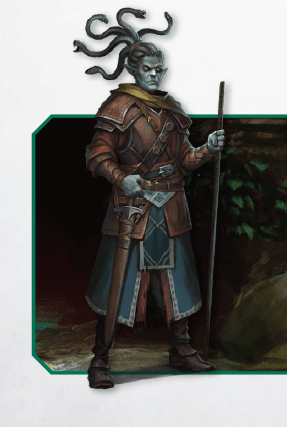
Medusae
Medusae are descendants of gorgons, cursed with serpent blood and a lingering echo of petrification in their gaze. They’re a classic mythic monster ancestry—equal parts horror and high fantasy—and DELVE clearly expects them to appeal to the kind of player who wants to walk into the dungeon already feeling dangerous.
Starting Features
- You know the Common language and one other common language.
- Stone Gaze: Once per day, you can force a creature you can see within near range to make a CON check (DC 15). On a failure, the creature is petrified for 3 rounds. A petrified creature is unable to move or act.
Review
This ancestry is where DELVE really starts to feel like it was written with 5E sensibilities first.
The issue is simple: petrification is a huge deal in Shadowdark. It’s not just a “cool ability,” it’s a fight-ending mechanic. Even limited to once per day, forcing a CON save that can lock a target down for multiple rounds can completely swing encounters, especially at low levels where Shadowdark combat is meant to be lethal and unpredictable.
Shadowdark thrives on tension. Combat should feel like it could go wrong at any moment. But a once-per-day “freeze the monster” button starts turning encounters into something closer to heroic fantasy—where the party expects to win because their character sheet includes a strong built-in power.
It also continues DELVE’s ongoing theme of ancestries leaning into monster fantasy. Medusae aren’t just unusual adventurers—they’re basically a playable monster with a signature monster ability. Again, it raises the perennial question:
Why do players always want to play the bad guys?
Verdict
Medusae are flavorful and memorable, but Stone Gaze is too encounter-warping for a system like Shadowdark. This ancestry feels more like a 5E race ability bolted onto Shadowdark than something designed with Shadowdark’s minimalist survival tone in mind.
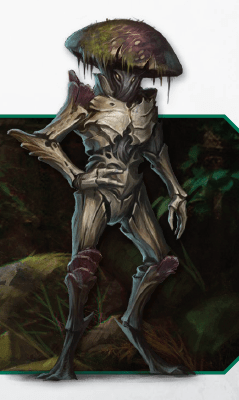
Mycelian
Mycelians are fungal humanoids born from rot, spores, and the strange ecosystems of the deep earth. They feel like something you’d actually find in a Shadowdark dungeon—quiet, alien, and unsettling.
Starting Features
- You know the Common language and one other common language.
- Poison Immune: You are immune to poison.
Review
Flavor-wise, Mycelians are one of the best fits in the entire DELVE ancestry list. They feel grimdark without feeling goofy, and they slide naturally into Shadowdark’s underground tone.
Mechanically, though, this ancestry is easily the most overpowered option in the book.
Poison immunity is a massive deal in Shadowdark. Poison isn’t a niche condition here—it’s one of the system’s main pressure tools. Traps, monster venom, tainted food, toxic mushrooms, diseased wounds… poison is everywhere in classic dungeon crawling, and Shadowdark leans on it hard to punish reckless exploration.
Being immune right out of the gate doesn’t just give a bonus—it removes an entire category of dungeon threat. That’s a big tonal shift. It feels less like “old-school grit” and more like “I picked the ancestry that gives me a permanent defensive buff,” which is exactly the kind of design mentality Shadowdark usually avoids.
This is where DELVE’s 5E DNA shows. The ancestry isn’t just a quick character hook—it’s a power feature designed to stand out on a character sheet.
Verdict
Probably the coolest flavor of the bunch, but also the clearest example of DELVE drifting into 5E-style ancestry design. Poison immunity is too strong for a system built on deadly dungeon pressure.
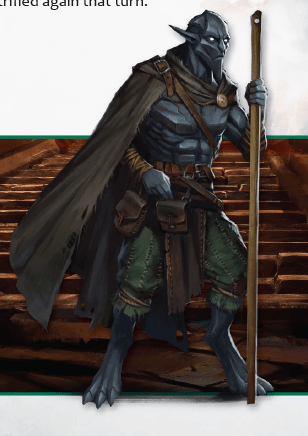
Stoneborn
Stoneborn are living stone humanoids—ancient, heavy, and carved from the bones of the earth itself. They feel like walking statues, shaped by forgotten powers or born from deep subterranean places where the dungeon is older than history.
Flavor-wise, they’re a solid fit for Shadowdark. If you want a character that feels like they crawled out of a ruined temple or stepped off a crumbling idol pedestal, Stoneborn delivers.
Starting Features
- You know the Common language and one other common language.
- Stone Body: Your skin is living stone. You have damage reduction 1 (reduce all incoming damage by 1, minimum 1).
Review
Stoneborn are another example of DELVE giving ancestries abilities that feel more like “build perks” than simple character hooks.
Damage reduction is extremely strong in Shadowdark because the system runs on tight math. When most weapons deal 1d6 or 1d8 damage and low-level characters have single-digit hit points, shaving off even 1 point from every hit is a major survivability upgrade. It makes a Stoneborn character noticeably harder to kill than the rest of the party, and Shadowdark is not really built around ancestries creating that kind of durability gap.
This also reinforces the overall 5E feel of the ancestry design. In Shadowdark, ancestry is meant to be fast and flavorful. In DELVE, ancestry is starting to feel like a package of combat features you choose for optimization.
And, once again, this is part of the “players want to play monsters” issue. Stoneborn aren’t just unusual humans—they’re basically a playable dungeon creature.
Verdict
Great dungeon flavor, but mechanically too strong for what Shadowdark ancestries usually represent. Damage reduction is a big deal in a lethal system, and this ancestry pushes the tone toward heroic durability rather than desperate survival.
Overall Verdict: Not Impressed
DELVE is an excellent GM tool, but its ancestry section is easily one of the book’s weaker parts.
These ancestries:
- feel mechanically uneven
- range from too situational to too powerful
- push Shadowdark toward 5E-style “build identity.”
- lean heavily into the “play a monster” fantasy
And that last point matters. Shadowdark works best when characters feel grounded, desperate, and human—even when they aren’t technically human. DELVE’s ancestry list feels like it was designed to encourage “look at my cool special race ability” play rather than “I am trapped in the dark, and everything wants me dead.”
If you want weird monster PCs in your game, DELVE delivers.
But if you want ancestries that feel like they were born out of Shadowdark’s minimalist design philosophy, this section feels like an afterthought—another case where the Shadowdark version seems bolted onto a book that still thinks in 5E terms.
Keep on gaming!
 tabletop-thoughts.com