01/04/2026
Happy Sunday, and welcome back to Tabletop Thoughts!
It’s been a fairly light week on the work front, which meant I actually had some solid, uninterrupted hobby time. I took full advantage of that and really powered through a stack of miniatures, making a good dent in the goals I set for myself for 2026. Weeks like this are always a nice reminder of what’s possible when the schedule opens up a bit—less bouncing between projects, more paint on minis, and real progress instead of just moving things from one pile to another.
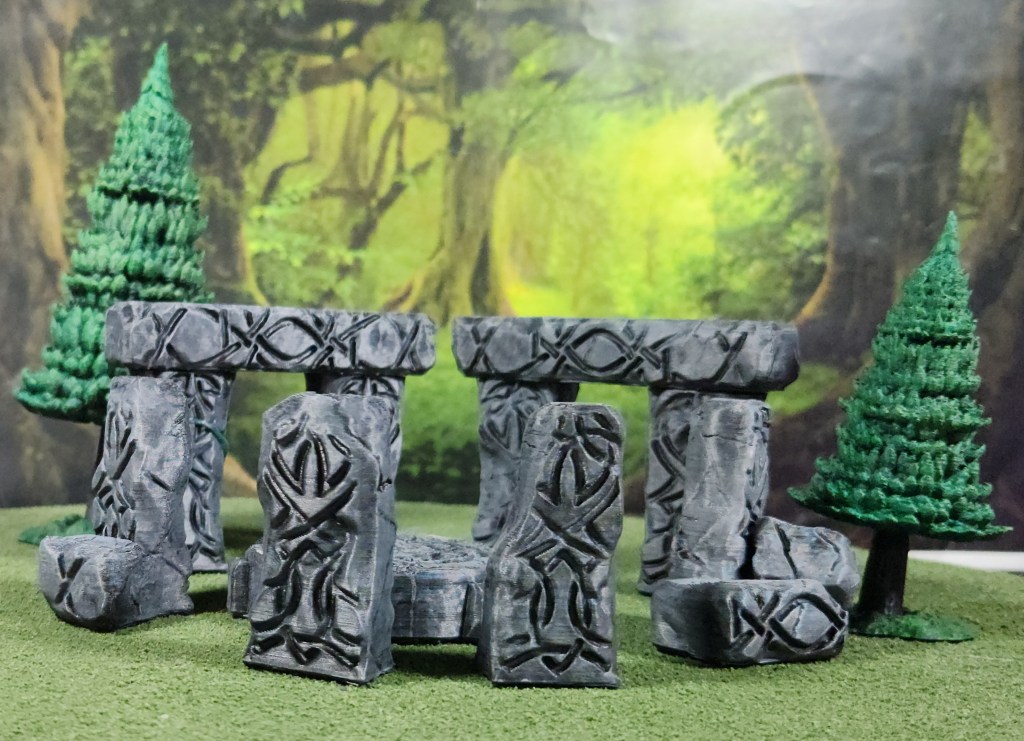
A forgotten druid circle, half-lost to the forest and heavy with old magic.
I was able to print and paint two full sets of the druid circles this week to help restock my Etsy store. These were printed in black filament on my FDM printer, then given a quick and efficient paint job—light gray dry brushing to pick out the stone texture, green ink for the vines, and a black wash to tie everything together. A quick spray of matte clear coat and they’re ready to hit the table (and the shop).
Both of the trees are new as well. They were printed in black filament, then hit with a white dry brush to bring out the highlights. Green ink was used on the pine needles, brown ink for the trunk, and a lighter shade of green ink for the ground cover. These will be added to the growing tree collection and will likely make appearances in future photos and videos.

A pair of adventurers pause before a golden dwarven door, watched over by silent stone guardians.
I printed another set of the dwarven statues using black filament, then highlighted them with a gray dry brush and a light wash.
The dwarven door started with black filament as well, followed by a gray dry brush, brown base paint, and gold accents on the doors. Everything got a black wash to bring out the details.
The adventurers are resin, primed in black, dry-brushed in white, and painted with Army Painter Speed Paints in a SlapChop-style paint job—quick, bold, and messy, but it gives them character. I finish everything off with a matte clear coat for a clean, uniform look.

Shadowed spiders guard a skull cave by a weathered dwarven monolith and rusty rails.
I printed another dwarven monolith—slightly different from my original one. It came in four parts that I had to glue together, then I gave it a gray dry brush and finished with a black wash to bring out the details.
The giant spiders were printed in black filament on my FDM printer. I layered them with a white dry brush, a brown ink wash, a light tan highlight, then added ivory for the fangs and red for the eyes to really make them pop.
To the right, there’s a broken dwarven statue head, printed in black filament, dry-brushed gray, and finished with a black wash to give it some depth and weathering.
I also printed another skull cave entrance, experimenting with a few different colors this time—reds, blues, and browns applied with a markup sponge. A white dry brush over the top followed by a black wash lets the colors peek through, giving the stone a more natural, weathered look.
The tracks were printed in black, dry-brushed gray, and the ground was shaded with brown ink. I painted the rails silver and added burnt orange for rust, finishing with a black wash to tie it all together.
I printed another Ruined Church and got it fully painted and ready for the Etsy store. I’m really happy with how it turned out—the textures and details just pop, and I love the weathered, ancient feel it gives. It’s always great to see that other people enjoy them as much as I do, too.
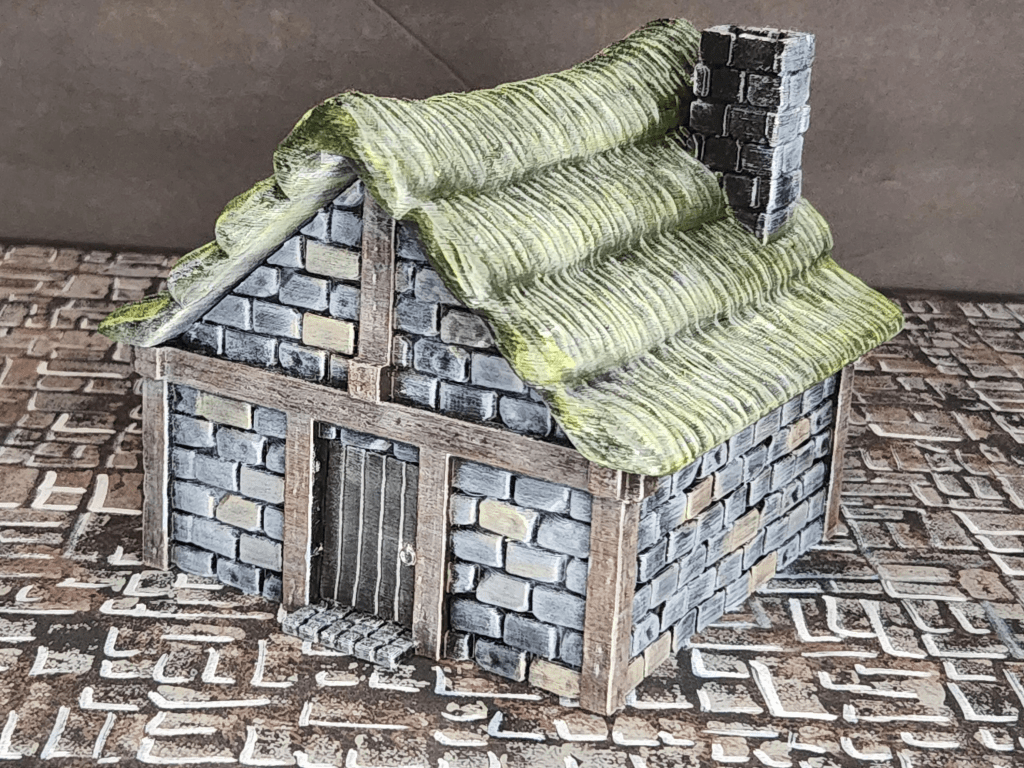
I also printed another cottage and got it fully painted for the Etsy store. These little buildings aren’t too difficult to print or paint, but they really shine on the gaming table. I love how a few simple layers of dry brushing and washes can bring out all the texture and make them feel like part of a lived-in world. They’re small, but they make a big impact in any scene!
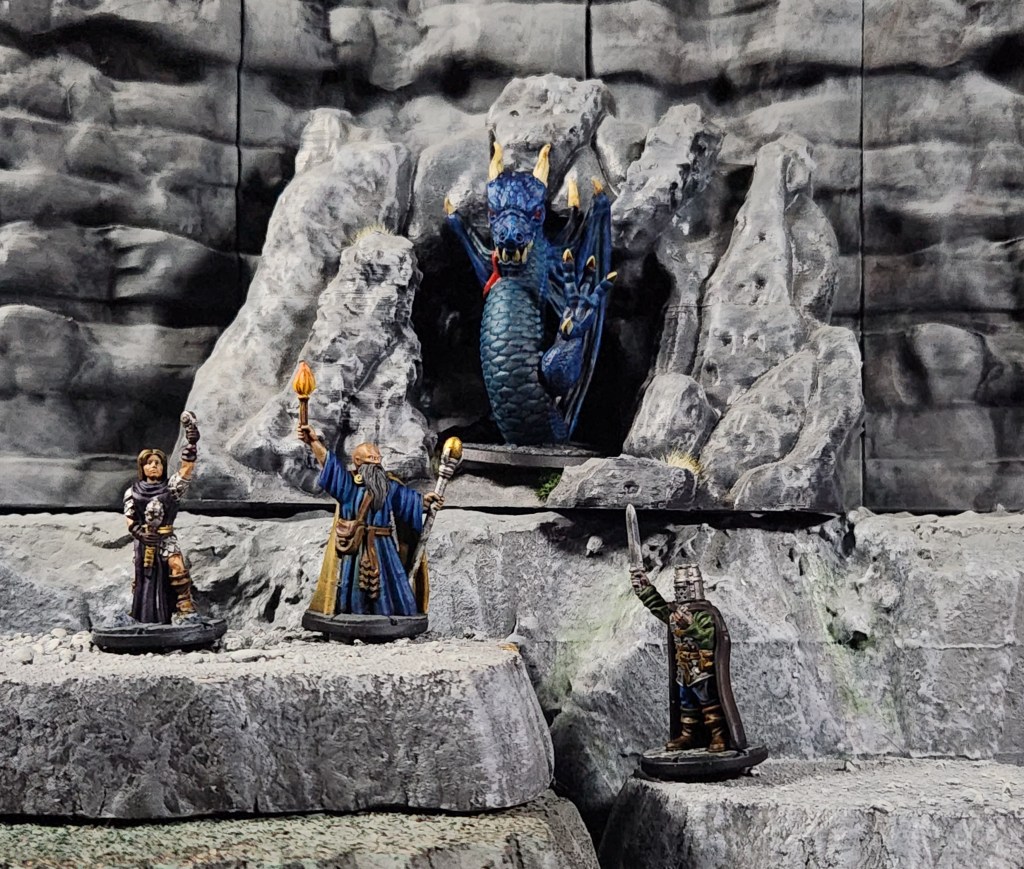
Adventurers face the wrath of a wyvern emerging from the dark cave.
I printed one of these wyverns before, but I sent it as a free gift to one of my Etsy customers. This time, I printed another in resin and repeated the same paint scheme—it really brings out all the details in the wings and scales.
The adventurers were all printed in resin as well, primed black, and given a quick but effective SlapChop-style paint job: white dry brushing followed by Army Painter Speed Paints. It’s fast, bold, and messy, but it really makes them pop on the gaming table.
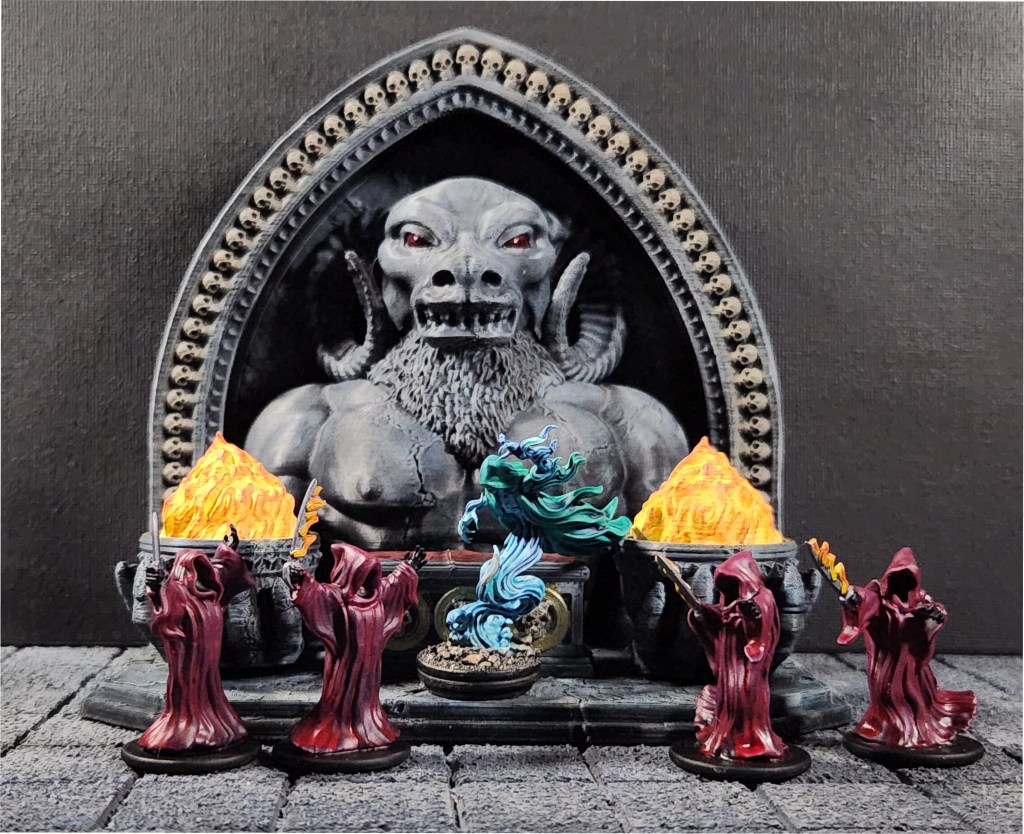
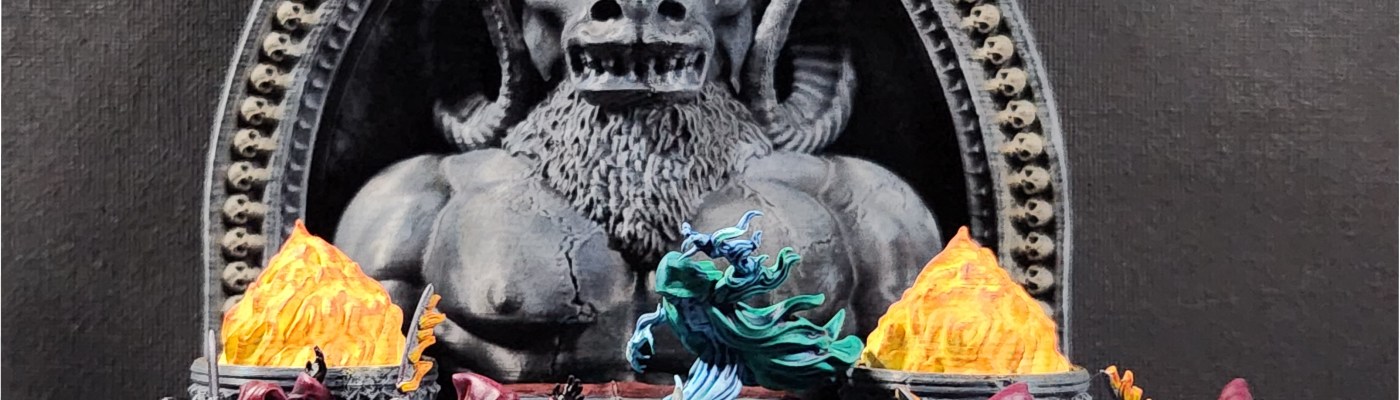
Four cultists gather before the Shrine of Orcus, a ghostly presence lingering at the altar.
I finished painting the rest of the cultists I had—after breaking a few, that’s the end of the batch. They were printed in resin, primed black, then layered with red ink and a cranberry dry brush, with black gloves for contrast. Their weapons got a silver highlight, and the flames were painted in yellow, orange, and red for a fiery effect.
The ghost was also printed in resin and highlighted with an airbrush, then layered with two different bluish speed paints. I used brown on the base to ground it in the scene.
The Shrine of Orcus was printed in filament and colored using the markup sponge technique. Once the colors were applied, I gave the whole piece a gray dry brush to bring out the textures. For the flames, I tried something I saw on TikTok: white base, a pink layer, then yellow and orange dry brushes, finished with a red dry brush. I think the flames came out fantastic, and I’ve definitely learned a new technique I’ll use on future flames.
The eyes of the Orcus statue were painted with red speed paint, then coated with gloss Mod Podge to make them look like glowing gems—or wet with blood, depending on how you see it.
I also managed to squeeze in some time to make another YouTube video. This one takes a tour of my “photography studio” in the basement, showing that you don’t need fancy equipment, tons of terrain, or professional-level skills to take great pictures of your miniatures. The main thing is just to start—practice naturally makes you better, and it’s a lot more fun than you might think!
As for my 2026 goals, I realized I hadn’t really thought about how to track terrain pieces like the druid circle or the trees. I’ve decided that smaller pieces—like individual trees—will count as miniatures for my goals. Larger projects that take more time and effort will count toward the “Large Models & Terrain” category.
Looking back over this week, that brings me to 37 miniatures painted and 2 large terrain pieces completed: the Ruined Church and the cottage. Feels good to see some solid progress already!
2026 Goals Progress
- Minis Painted: 37 / 150
- Large Models / Terrain: 2 / 6
- YouTube Videos: 1 / 24
- Game Reviews: 0 / 4
- Games Played (TTRPG + Board Games): 0 / 4
- Thursday Drop-Ins Created: 0 / 12
- New TTRPG Systems Tried: 0 / 3
- Shadowdark Mini-Campaign Sessions: 0 / 3
- Shadowdark Release on DriveThruRPG: 0 / 1
Overall, not a bad start to 2026!
Keep on gaming!
 tabletop-thoughts.com