12/19/2025
Happy Friday, and welcome back to Tabletop Thoughts!
One of my favorite ways to make a TTRPG world feel alive—even when the party isn’t looking—is to run factions behind the scenes. Not just “groups that exist,” but groups that want things, are actively working toward those things, and keep running into trouble along the way. When done right, factions create tension, motion, and consequences without you ever needing to railroad the players.
Let’s talk about a simple, manageable way to run factions at the table.
Why Factions Matter
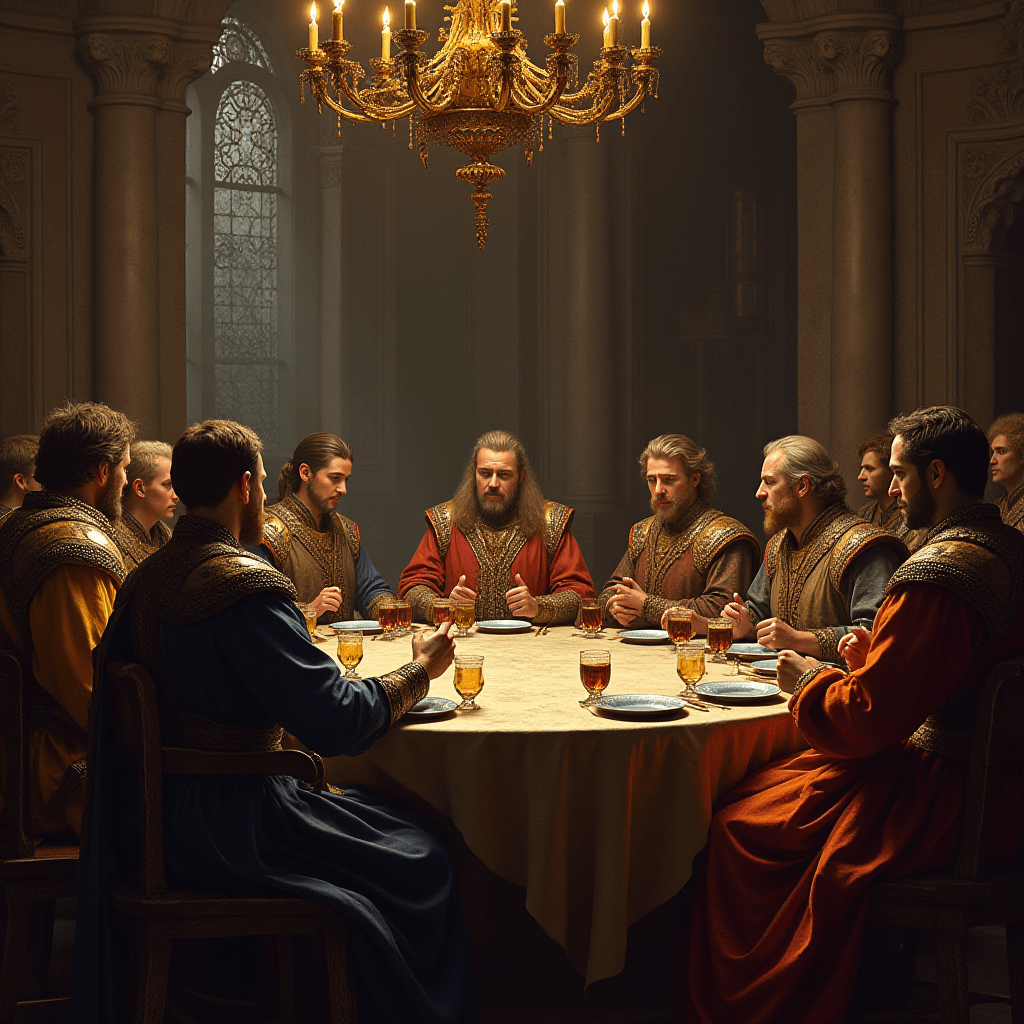
Factions give your world momentum. Even if the players spend three sessions arguing in a tavern, the world doesn’t pause. Factions continue to scheme, fight, negotiate, and fail in the background. Then, when the party does get involved, it feels like they’re stepping into an ongoing story instead of triggering one from scratch.
That said, more isn’t always better.
The Magic Number: 3–5 Factions
I strongly recommend a minimum of 3 factions, with 5 as an absolute maximum.
- 3 factions create a triangle of tension. Someone is always at odds with someone else.
- 4–5 factions adds complexity and shifting alliances.
- More than 5 becomes hard for players to track and a bookkeeping nightmare for the GM.
If your players can’t summarize who’s who in a sentence or two, you probably have too many.

The Three Questions Every Faction Needs
Every faction should be defined by answering these three questions:
- What does the faction want right now?
This is their immediate, actionable desire. - What is their end goal?
The long-term vision. This might be idealistic, selfish, noble, or horrifying. - What is stopping them?
This is the most important part. If nothing is in their way, the story is already over.
Often, the answer to question three is another faction.
Example: Three Factions in Conflict
Let’s build a small faction ecosystem you can drop into almost any fantasy setting.
1. The Iron Crown Council
A loose alliance of nobles, generals, and administrators
- Wants: Stability and control over the region
- End Goal: A unified realm under centralized rule
- What’s Stopping Them: Local resistance and lack of popular support
What They Think of the Others:
- The Verdant Circle: Dangerous idealists who undermine progress with “nature nonsense.”
- The Ashen Covenant: A necessary evil… until they aren’t.
The Council believes order is worth any cost. If villages burn to keep the peace, so be it.
2. The Verdant Circle
Druids, rangers, and folk who live beyond the reach of the crown
- Wants: Protection of the wilds and autonomy from the cities
- End Goal: A world where nature cannot be owned, taxed, or conquered
- What’s Stopping Them: Military pressure and dwindling sacred sites
What They Think of the Others:
- The Iron Crown Council: Tyrants in polished armor, choking the land to feed their cities.
- The Ashen Covenant: An existential threat that must be erased at any cost.
The Circle isn’t united—some want peace, others want the forests to reclaim everything.
3. The Ashen Covenant
A secretive cult that believes the world is already doomed
- Wants: Forbidden relics and lost knowledge
- End Goal: Trigger an apocalyptic rebirth of the world
- What’s Stopping Them: Limited resources and constant interference
What They Think of the Others:
- The Iron Crown Council: Useful shields and future sacrifices.
- The Verdant Circle: Short-sighted fools clinging to a dying world.
The Covenant thrives on chaos. Every clash between the other two factions is an opportunity.
Why This Works at the Table
Notice a few things:
- Every faction’s goal directly conflicts with at least one other.
- None of them is purely good or evil (even if some are worse).
- The players can side with one, oppose one, or play them all against each other.
Most importantly, the factions act even if the players don’t. If the party ignores them:
- The Council expands.
- The Circle radicalizes.
- The Covenant gets closer to ending everything.
That’s pressure. And pressure creates play.
Final Thoughts
You don’t need spreadsheets, flowcharts, or a novel’s worth of lore. Start with three factions, answer the three questions, and decide how they feel about each other. Once that’s in place, your world will start generating story hooks on its own.
And when your players ask, “What happens if we don’t get involved?”
You’ll already know the answer.
Keep on gaming!
 tabletop-thoughts.com