
10/10/2025

The Shadowdark RPG wears its old-school roots proudly. Torches burn out after an hour, hit points are precious, and death lurks behind every flickering shadow. But while it clearly draws inspiration from the OSR (Old School Renaissance) scene, Shadowdark doesn’t just copy—it translates. It takes the feel of classic dungeon crawling and reworks it for a smoother, faster, and more accessible play experience.
So what does Shadowdark actually keep from those dusty tomes of early editions? What does it fix? And what can GMs of any system learn from its approach?
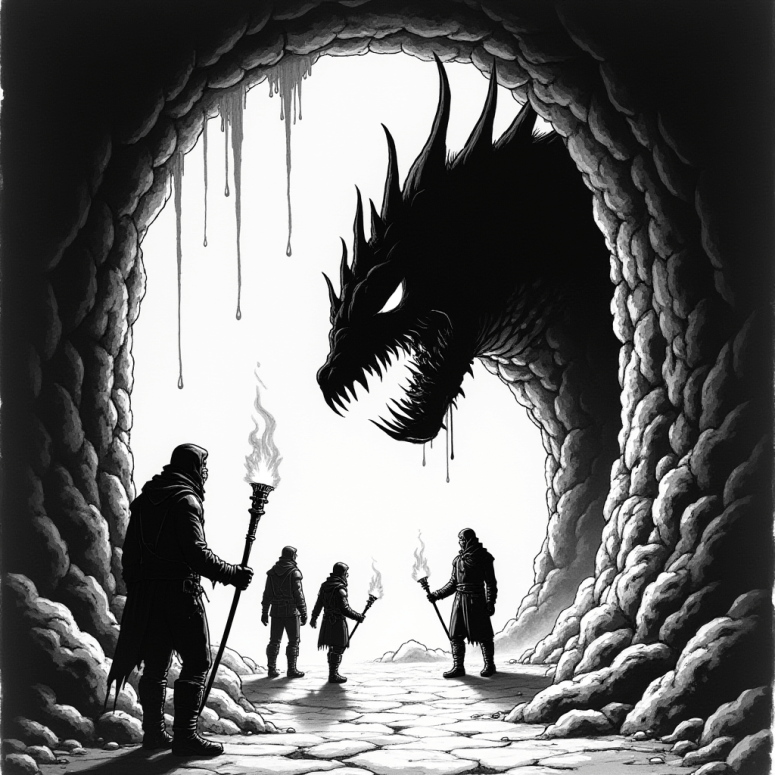
What Shadowdark Keeps from the OSR
The Crawl Comes First.
The heart of Shadowdark is exploration—time, light, and danger. This is pure OSR DNA. Every torch matters, every passageway hides risk, and every rest carries a cost. There’s no hand-waving through the dungeon; you’re meant to feel the tension of resource management, the creeping dread of dwindling light.
Fragile Heroes, Real Stakes.
Shadowdark keeps that “play smart or die fast” mentality. Characters are competent but mortal—your fighter isn’t wading through ten goblins without a plan. The thrill comes from cautious tactics and clever thinking, not bloated stat blocks.
Simplicity and Speed.
Like many OSR games, Shadowdark keeps the rules lean. There’s little to memorize and plenty of room for rulings over rules. That’s part of the charm: the GM can improvise freely without getting tangled in subsystems.
The Unknown Is the Point.
Shadowdark embraces mystery. The world feels dangerous because you don’t have charts explaining every monster, every spell, every consequence. It’s a philosophy of discovery—and that’s the magic that powered early RPGs.

What Shadowdark Fixes (or Modernizes)
Unified Mechanics.
Classic OSR systems often mix roll-high, roll-low, saving throws, and percentile rolls in one stew. Shadowdark simplifies it: roll a d20, add a bonus, beat a target number. Everything flows through the same resolution system. That alone makes the game easier to teach and faster to run.
Bounded Accuracy Meets Old-School Play.
Shadowdark’s math doesn’t spiral out of control. ACs, bonuses, and DCs stay tight, meaning low-level characters can still matter later. It’s reminiscent of 5E’s “bounded accuracy,” but applied in a more lethal, grounded way.
No Dead Levels, No Bookkeeping.
Leveling up feels good—each level adds something useful without bogging you down in number crunching. Shadowdark also strips away the fiddly parts of early editions (like calculating encumbrance to the ounce or memorizing Vancian spell slots) while still keeping the feel of limited resources.
Modern Layout, Classic Flow.
Let’s be honest: part of the OSR’s charm comes with a dose of confusion. Shadowdark’s presentation is clean and intuitive. The layout, art, and usability make it easy to dive into, even if you’ve never cracked open a Moldvay Basic book.

The Innovations Shadowdark Brings
Real-Time Torches.
That ticking clock mechanic—where torches last one real-world hour—transforms pacing. It creates urgency without needing a GM to nag players about light sources. It’s a brilliant blend of immersion and practicality.
Simultaneous Initiative.
Shadowdark speeds up combat by grouping the sides: all the heroes go, then all the monsters. This small change keeps the table’s energy high and combats snappy—no more waiting 10 minutes for your turn.
The Magic of Discovery.
Random tables, mysterious scrolls, and undefined lore let GMs shape the world dynamically. The system encourages play-first, define-later, which keeps the story organic and player-driven.
Accessibility Without Compromise.
Shadowdark shows that “OSR feel” doesn’t mean “gatekeeping.” It’s approachable for new players and veterans alike, which might be its biggest innovation: it invites everyone to the dungeon.
Lessons for Any GM
Even if you don’t run Shadowdark, there’s a lot to learn from its design philosophy:
- Keep tension alive. Time limits, dwindling resources, and meaningful choices make exploration exciting.
- Favor rulings over rules. Let the story breathe by trusting your instincts more than the rulebook.
- Simplify to amplify. Sometimes, less crunch means more creativity at the table.
- Celebrate mystery. Don’t overexplain your world—let the players wonder.
Shadowdark proves that old-school doesn’t mean outdated. It’s a translation, not a transplant—a love letter to the past written in the language of modern design.
Final Thoughts
If classic OSR is the worn, handwritten map, Shadowdark is the crisp torchlight that lets you see its lines clearly. It’s not a reinvention—it’s a reawakening.
Whether you’re crawling through forgotten tombs or just mining them for ideas, Shadowdark reminds us why we fell in love with tabletop RPGs in the first place: the danger, the discovery, and the shared thrill of the unknown.
Keep on gaming!
 tabletop-thoughts.com