07/25/2025
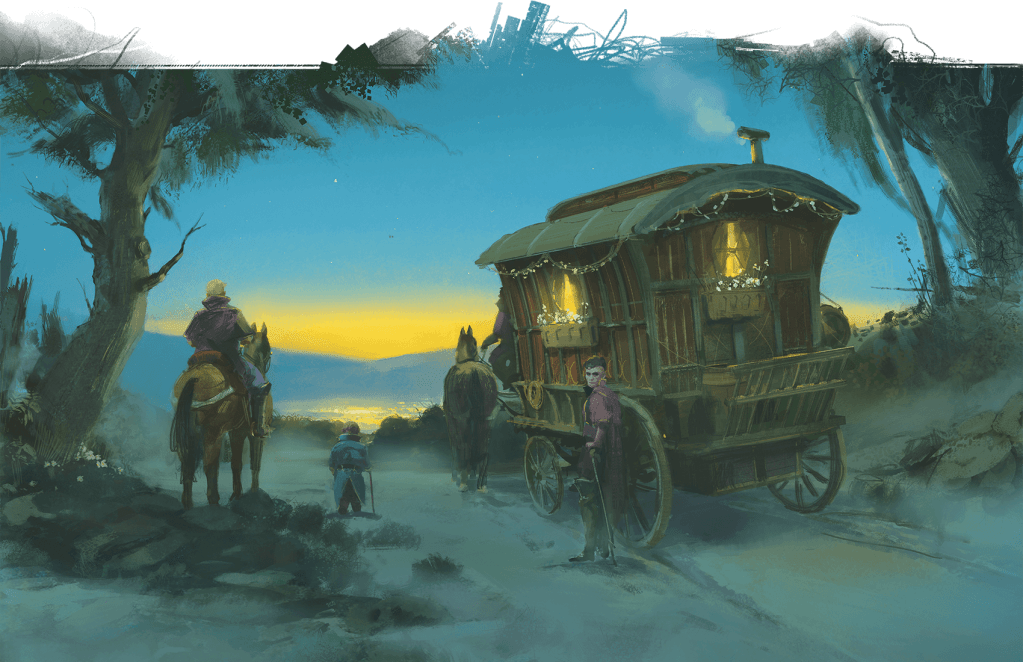
In many fantasy tabletop RPGs, the most exciting parts of the game happen in dungeons, boss fights, or bustling cities. But what about the spaces between those destinations? Overland travel—the long, winding road from Point A to Point B—can be more than just a time skip or a chance to roll for a few random encounters. With the right tools and a bit of preparation, the journey itself can become a memorable and meaningful part of the game.
The Power of a Good Random Encounter
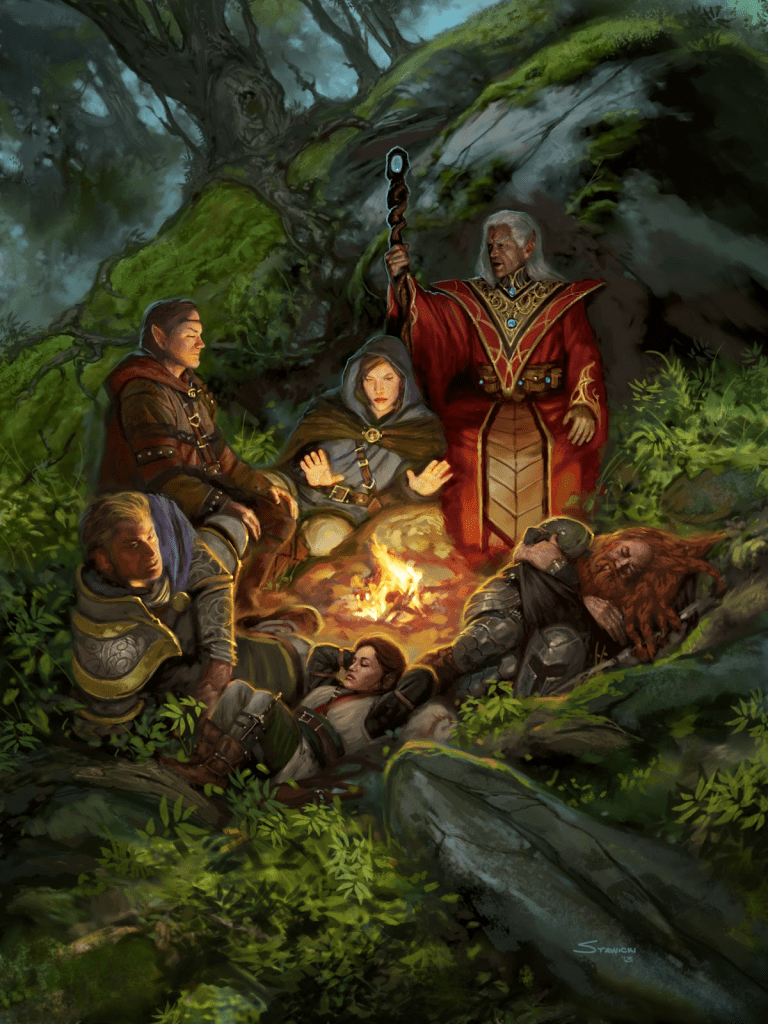
Let’s be honest: most of us have sat through a random encounter that felt like filler. “You’re attacked by 4 goblins. Roll initiative.” It’s fine, but it doesn’t do much to immerse players in the world. A well-crafted random encounter, however, can feel like a natural part of the world’s ecosystem and narrative. It might reveal something about the local culture, hint at a nearby threat, or force the players to make a meaningful choice.
That’s where Schrödinger’s Scenarios come in handy—short, flexible encounter setups that aren’t tied to a specific location or plot point. By keeping a folder of these on hand, GMs can insert them seamlessly into travel scenes. These aren’t just “random” events; they’re curated possibilities that feel like they belong, even if the dice triggered them.
| Die Roll | Creature (Die 1) | Activity (Die 2) | Complication (Die 3) |
|---|---|---|---|
| 1 | A lost child | Crying loudly | Has a treasure map |
| 2 | A cloaked stranger | Sleeping atop a rocky outcrop | Informant for a nearby warlord |
| 3 | Bandits | Cooking a strange stew | Stalked by something invisible |
| 4 | A merchant caravan | Digging shallow pits | Wounded and being tracked by hunters |
| 5 | Goblins | Setting up a fake toll road | Impersonated by a shapeshifter(s) |
| 6 | A wyvern | Wandering alone on the road | Cursed — wild animals avoid them |
D666 Tables: Creature + Activity + Complication
To make overland travel truly engaging, it helps to break free from the usual “roll monster, roll initiative” structure. One way to do this is with a D666-style encounter table, but not in the traditional sense. Instead of treating the 3d6 roll as a single number from 111 to 666, try rolling three six-sided dice, each representing a different axis of the encounter:
- Die 1 (Creature): Who or what is the party encountering?
- Die 2 (Activity): What are they doing when encountered?
- Die 3 (Complication): What unexpected twist makes the encounter more interesting?
This modular format creates endless variety and helps the GM improvise quickly while still delivering rich, organic world-building. Using the table above for example:
- Roll: 3 – 5 – 2
- Creature: Bandits
- Activity: Setting up a fake toll road
- Complication: One of them is an informant for a nearby warlord
- Roll: 6 – 2 – 4
- Creature: A wyvern
- Activity: Sleeping atop a rocky outcrop
- Complication: It’s wounded and being tracked by hunters
- Roll: 1 – 6 – 6
- Creature: A lost child
- Activity: Wandering alone on the road
- Complication: They’re cursed, and wild animals avoid them
With this format, you’re not just populating a hex or filling time—you’re telling a story that responds to the world around it. You can build themed versions of this table for different biomes, factions, or campaign arcs, and reuse them over and over with fresh results.
Shadowdark and the Weight of Travel
Games like Shadowdark take overland travel to the next level. Since you can only rest in secure locations, every encounter on the road comes with real risk. Do you push on while wounded, or take a detour to find shelter? Random encounters aren’t just combat speed bumps—they’re part of the game’s survival loop. Compare that to traditional D&D, where a long rest restores everything and players are encouraged to go all out in every fight. There, random encounters often feel like a waste of time unless they tie directly into the plot.
In Shadowdark, your decisions on the road matter. That wolf pack you avoided at dusk? They might be the reason you don’t find a safe place to rest. That strange traveler you helped? Maybe they tell you about a shortcut through cursed woods. The travel becomes gameplay, not downtime.
Conclusion
Overland travel shouldn’t be a blank space on your campaign map. With the right mix of creative encounters, world-building tools like Schrödinger’s Scenarios, and a flexible Creature + Activity + Complication D666 table, you can make the journey just as compelling as the destination.
Got a favorite encounter table format? Or a travel story that derailed your whole campaign (in the best way)? Share it in the comments!
Keep on gaming!
 tabletop-thoughts.com