
04/24/2025
When it comes to building a sandbox-style campaign, it’s tempting to dive headfirst into the nitty-gritty: population numbers, grain exports, the exact shade of the duke’s doublet. But if you want to create a world that feels alive and sticks in your players’ memories, start big — literally.
Today, we’re diving into one of my favorite worldbuilding strategies: “Landmarks Before Details.”
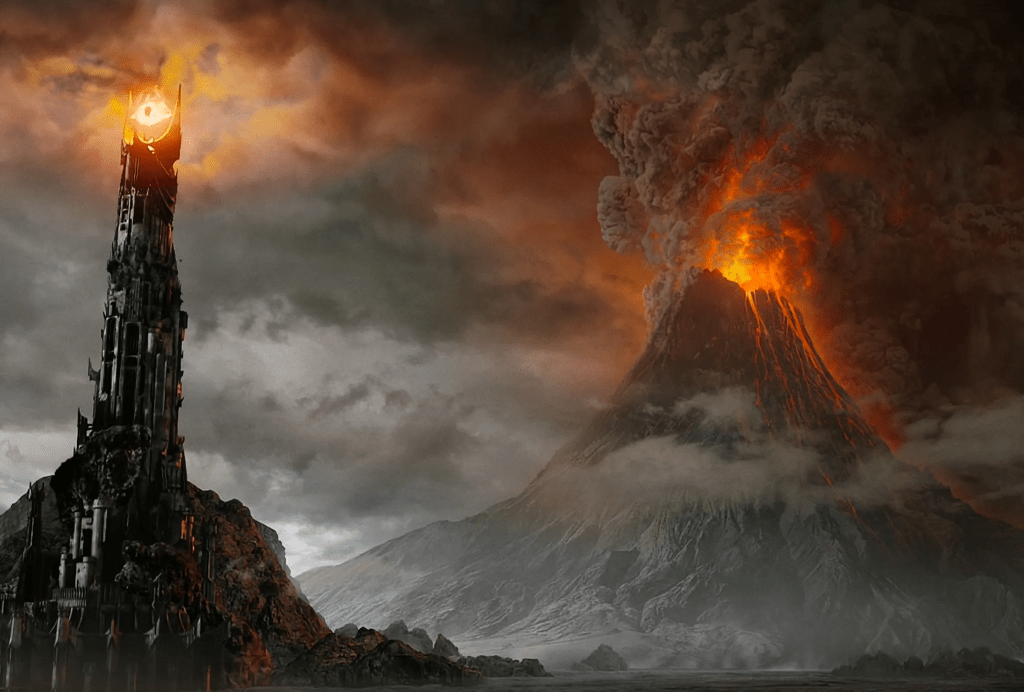
Big, Bold, and Memorable
Think about your favorite fantasy worlds—Middle-earth, The Witcher’s Continent, Faerûn. What sticks out first? Chances are, it’s not the GDP of Waterdeep or the political structure of Rohan.
It’s the Mount Doom, the Tower of the Swallow, the Spine of the World.
These are landmarks—striking, evocative places that instantly fire the imagination. They’re easy for players to remember, they look great on a map, and they beg for questions like:
- “What happened at the Ruins of Morlain?”
- “Who actually lives near the Shattered Peak?”
- “Can we go there?”
And just like that, you’ve hooked them.

How It Works in Practice
Instead of building your world from the ground up, try this:
- Sketch 5–7 iconic landmarks across your region. Think big: ruined towers, bloodstained battlefields, haunted forests, a cursed river, a giant skeleton no one talks about.
- Give each one a name that hints at a story. “The Singing Marshes,” “The Broken Temple,” or “Blackspire Hollow” create curiosity with just a few words.
- Drop some rumors about them—nothing detailed, just enough to suggest something is happening (or has happened) there.
- Let the players choose where to go.
You’re not locking in story beats. You’re planting narrative seeds.

The Power of Implied History
Here’s the magic: these landmarks suggest a world larger than what’s on the table. Even if the players don’t visit the Bleeding Tree for 10 sessions, they’ve heard of it. It exists. And when they do go there, you can flesh it out with the tone and story you want in the moment—but now, it feels earned.

Tips for Crafting Great Landmarks
- Use strong adjectives or verbs. “The Shattered Throne” feels more dynamic than “Old Throne Room.”
- Think visually. What would look cool on a map or sketch?
- Let the name hint at conflict or mystery. “The Silent Tower” is better than “The Northern Watchtower.”
- Tie them to your world’s tone. Grimdark? Weird fantasy? Heroic high adventure? Reflect that in the game world.
Final Thoughts
Starting with landmarks doesn’t mean you ignore the little stuff—it just gives you a strong foundation. These bold places are your anchor points. You can build towns, roads, factions, and stories around them once your players start biting.
And they will bite.
After all, who could resist exploring a place called The Weeping Stone, where no one has returned in over a hundred years?
What are some of your favorite landmarks from games you’ve run or played in? Drop a comment or message us — we’d love to hear what iconic locations have defined your campaigns.
Keep on gaming!
 tabletop-thoughts.com