12/27/2024
Creating an engaging tabletop role-playing game session is an art and a science. The success of your game hinges on the active participation of your players, each bringing their unique personalities and play styles to the table. However, keeping everyone equally involved can be challenging. Here, we’ll explore practical strategies for engaging players with different personalities, ensuring everyone stays invested in your game and story.

Understanding Player Types
Before diving into strategies, you must recognize the diverse types of players at your table. While every player is unique, they often fall into one or more broad categories:
- The Storyteller: Loves rich narratives and character development.
- The Strategist: Enjoys tactical combat and problem-solving.
- The Performer: Relishes role-playing and dramatic flair.
- The Explorer: Seeks to uncover lore, maps, and hidden details.
- The Casual Player: Plays for social interaction and fun but may be less invested in the mechanics or story.
- The Rulemaster: Thrives on understanding and optimizing the game mechanics.

Tailoring Engagement Strategies
To engage your players effectively, you must address their preferences and playstyles while ensuring they feel included in the group dynamic. While it might take a little prep at the beginning of the campaign to determine play types, it pays off big in the long run.

1. Encourage Role-Playing with Prompts
For players who might feel shy or unsure about role-playing, provide prompts to guide their character’s actions. For example, ask:
- “How does your character react to the Duke’s accusations?”
- “What does your character do during the campfire scene?”
Even a simple nudge can help quieter players step into their roles. Pair this with positive reinforcement when they participate.
Something I like to do when this happens is throw a prompt to the player who is being quiet in the group. For example: Tell the quiet player that while the others are engaged in conversation with the Duke, they notice a man in the doorway listening in on the conversation. When the man notices that he has been spotted, they walk away down the hall and out of sight. This is normally enough to get the player to speak up to the others about the person or at least move over to the doorway to see what is going on.

2. Incorporate Strategic Challenges
Strategists thrive on combat scenarios, puzzles, and challenges that require critical thinking. Introduce encounters where their tactical skills shine, such as a multi-stage battle with environmental hazards or a complex puzzle with layers to unravel.
For example:
- An ambush where enemies use the terrain to their advantage, encouraging clever counter-strategies.
- A riddle-locked door that requires cooperation and ingenuity to open.
Combat encounters in a bare square room are boring and forgettable. Even if the players are fighting in a tavern, describe the surroundings; Barrels of ale in the corner that can be hidden behind for cover, tables covered in tankards that can be flipped over onto enemies, countertops that can be climbed onto to give advantage for having the high ground (I’m looking at you Obi-Wan).

3. Spotlight Individual Characters
Each player wants their moment in the spotlight. Create opportunities for each character to shine by weaving their backstories into the main plot. For instance:
- If a character is searching for a lost sibling, include clues to their whereabouts in your world.
- If a bard loves performing, let them earn favor with an NPC by putting on a dazzling show.
Every player should be in the spotlight each session, even if it is a short encounter with another person from their hometown. This gives each player a chance to build on the game world and makes them feel like they are part of the game’s history, not just appearing one day like a new character in an online MMORPG.

4. Utilize Exploration and Discovery
For explorers, scatter your world with hidden lore, secret paths, and mysterious artifacts. These players love the thrill of uncovering something new. When designing your sessions, ask:
- “What piece of hidden history could they stumble upon here?”
- “How can I reward curiosity?”
Some players love making maps and finding new locations. These players should be given rumors about far-away towers or haunted ruins to add to the map. Eventually, these players will start asking the rest of the group when they should explore these locations and start to help drive the story. As long as they give you a heads-up so you can prep the next session, these players make the gamemaster’s life a little easier.

5. Foster Group Collaboration
Many players enjoy working together to solve problems. Design scenarios that require teamwork, such as:
- A magic ritual that needs multiple characters to perform specific tasks simultaneously.
- A social encounter where different players can contribute based on their skills, like persuasion, intimidation, or insight.

6. Use Visual Aids and Props
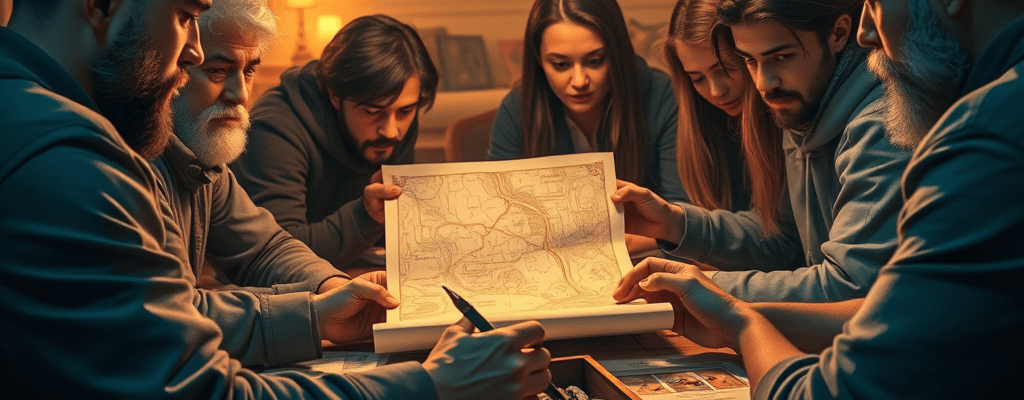
Casual players often respond well to tactile or visual elements. Bring the game to life with maps, miniatures, handouts, or thematic music. These tools can make the game feel more immersive without requiring heavy investment from less story-driven players.
I ALWAYS have something for the players to interact with during a game. I love creating maps and miniatures (which is obvious to anyone who follows this site) for the players to use during the game. This keeps the players engaged with the story as well as giving every player something to see, do, touch, etc.

7. Check In Regularly
Some players, particularly the more reserved ones, may need a little extra attention. Check-in with them in-game and out-of-game to ensure they’re enjoying themselves. Simple questions like, “What do you think your character would do here?” can prompt engagement without putting them on the spot.
This is especially necessary when dealing with larger tables. Some players might take over the spotlight and others will fade into the background. Shadowdark deals with this by staying in initiative order, even when in exploration mode. Every player will still take a turn and nobody is “pushed” into the background by others that are more extroverted.

Practical Example: The Town Under Siege
Imagine a scenario where the party arrives in a town besieged by bandits. Here’s how you might engage different players:
- The Storyteller: Uncover the motivations of the bandit leader, tying it to their personal backstory.
- The Strategist: Plan the town’s defenses and lead a counterattack.
- The Performer: Rally the townsfolk with an inspiring speech or deceptive ploy.
- The Explorer: Discover hidden tunnels or resources to aid the town.
- The Casual Player: Interact with quirky NPCs or participate in lighthearted moments, like helping a child find their missing dog.
- The Rulemaster: Optimize the group’s equipment and strategies to ensure victory.

Conclusion
Engaging all players requires a balance of creativity, flexibility, and attentiveness. By recognizing their unique preferences and providing tailored opportunities to shine, you can create a dynamic, inclusive, and enjoyable experience for everyone at the table.
What strategies have worked best for engaging your players? Share your thoughts and experiences in the comments!
Keep on gaming!
 tabletop-thoughts.com